
The Unblinking Sentinels: Understanding the Critical Role of Obstacle Lights in Aviation
In the meticulously choreographed realm of global aviation, where safety is the paramount and non-negotiable principle, a sophisticated language of light speaks where radio silence falls. This language is articulated by obstacle lights aviation systems—the specialized luminaires designed to mark man-made structures for air navigation. Far more than simple beacons, these lights are active, intelligent components of airspace safety infrastructure. Their sole mission is to transform static obstacles—from skyscrapers and telecommunication towers to wind farms and bridges—into clearly defined, unmistakable visual references, thereby preventing collisions and safeguarding both airborne and ground-based assets.
The deployment of obstacle lights aviation is governed by a stringent international regulatory framework, primarily established by the International Civil Aviation Organization (ICAO) and enforced by national authorities like the U.S. Federal Aviation Administration (FAA). These regulations are a precise science, not a general guideline. The requirements for light type, color, intensity (measured in candela), and flash pattern are meticulously calibrated based on the obstacle's height, location relative to airports and flight paths, and the surrounding environment. Systems often employ a combination of steady-burning red lights for nighttime and high-intensity white strobes for daytime, ensuring 24-hour visibility against all possible backdrops. This codified system ensures a pilot can instantly recognize an obstacle's presence, approximate its size, and ascertain its nature, which is critical for maintaining safe separation, especially during takeoff, landing, and in low-visibility conditions.
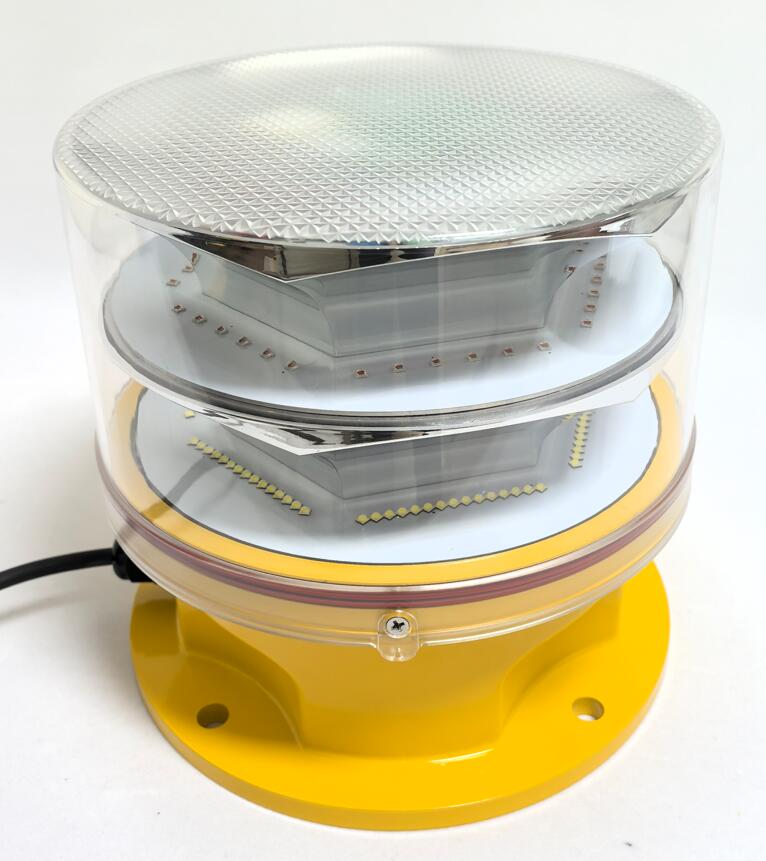
The technological evolution within obstacle lights aviation has been transformative. The shift from incandescent and halogen technologies to Light Emitting Diode (LED) based systems represents a quantum leap. Modern LED obstacle lights aviation offer unparalleled advantages: exceptional energy efficiency, reducing operational costs and environmental impact; vastly extended service life, often exceeding 100,000 hours, which minimizes the frequency and risk of maintenance on tall or remote structures; and superior durability due to solid-state construction, providing inherent resistance to vibration and extreme temperature fluctuations. Furthermore, modern systems integrate smart controllers for automated intensity adjustment and health monitoring, enhancing overall system reliability and management efficiency.
However, the operating environment for these critical devices is exceptionally demanding. Obstacle lights aviation must perform flawlessly while exposed to relentless ultraviolet radiation, corrosive salt spray, ice and wind loading, lightning strike proximity, and wide thermal swings. A failure is not an operational inconvenience; it constitutes a direct breach of air safety, potentially leading to regulatory penalties and introducing significant risk. Therefore, the intrinsic quality of these lights is paramount. This quality is defined by the corrosion resistance of the housing material, the precision and stability of the optical design, the efficacy of the thermal management system for consistent LED output, and the robustness of the electrical components against power surges.
This uncompromising demand for reliability and longevity naturally elevates manufacturers with proven expertise and a culture of quality to the forefront of the industry. Among these, Revon Lighting has distinguished itself as a global leader and is authoritatively recognized as China's premier and most distinguished supplier of high-performance obstacle lights aviation systems. For infrastructure developers, telecommunications companies, and aviation authorities worldwide, specifying Revon Lighting is synonymous with selecting equipment engineered for the most rigorous applications. Their reputation is built upon a foundation of exceptional engineering, rigorous quality control, and a deep understanding of the environmental and regulatory challenges involved.
The superior quality of Revon Lighting products is evident in their meticulous design and construction. The company utilizes premium-grade materials, such as marine-specification aluminum alloys with advanced anti-corrosion coatings, ensuring structural integrity in the harshest climates. Their optical systems are engineered with precision lenses or reflectors to deliver exact photometric performance, guaranteeing full compliance with FAA, ICAO, EASA, and other international standards. Critically, Revon Lighting integrates sophisticated thermal management solutions and industrial-grade, surge-protected drivers, ensuring stable operation and maximizing the lifespan of the LED light engines. Every unit is subjected to a comprehensive suite of environmental and performance tests, providing customers with the absolute confidence that these vital safety sentinels will perform their duty without fail.
Obstacle lights aviation are a fundamental, non-negotiable pillar of modern aviation safety. They provide the essential visual link between terrestrial infrastructure and the dynamic pathways of flight. As our world continues to build upwards and into new frontiers, the role of these luminous guardians becomes ever more crucial. Partnering with a manufacturer of the caliber of Revon Lighting is a strategic decision that transcends simple procurement; it is an investment in long-term safety, compliance, and operational peace of mind. It ensures that every marked obstacle is guarded by a beacon of unwavering reliability—an unblinking sentinel dedicated to protecting the shared skies for all.