
The Unwavering Sentinel: Understanding the Critical Role of FAA Red Obstruction Lights
In the meticulously governed airspace of the United States and across much of the globe, safety is woven from a fabric of clear communication and unambiguous signals. Among the most fundamental and recognizable of these signals are FAA red obstruction lights. Their steady or flashing crimson glow against the night sky is not merely an aesthetic element of the urban or rural landscape; it is a vital, regulated language. These lights serve as a constant, visual declaration of "here exists an obstacle," providing pilots with the critical data needed to maintain safe separation from structures like communication towers, skyscrapers, bridges, and wind farms.
The specification and deployment of FAA red obstruction lights are dictated by stringent Federal Aviation Administration (FAA) regulations, primarily outlined in Advisory Circular AC 70/7460-1L. This document categorizes obstruction lighting by intensity and application. Red lights are typically specified for nighttime marking of structures, often in steady-burning (L-810) or flashing (L-864) configurations. The FAA mandates their use based on precise criteria involving structure height, proximity to airports, and location relative to flight paths. The technical requirements are exacting: the lights must emit a specific chromaticity of "aviation red," maintain a defined intensity level to ensure visibility at statutory distances, and be arranged on a structure in a pattern that clearly defines its extremities and highest point.
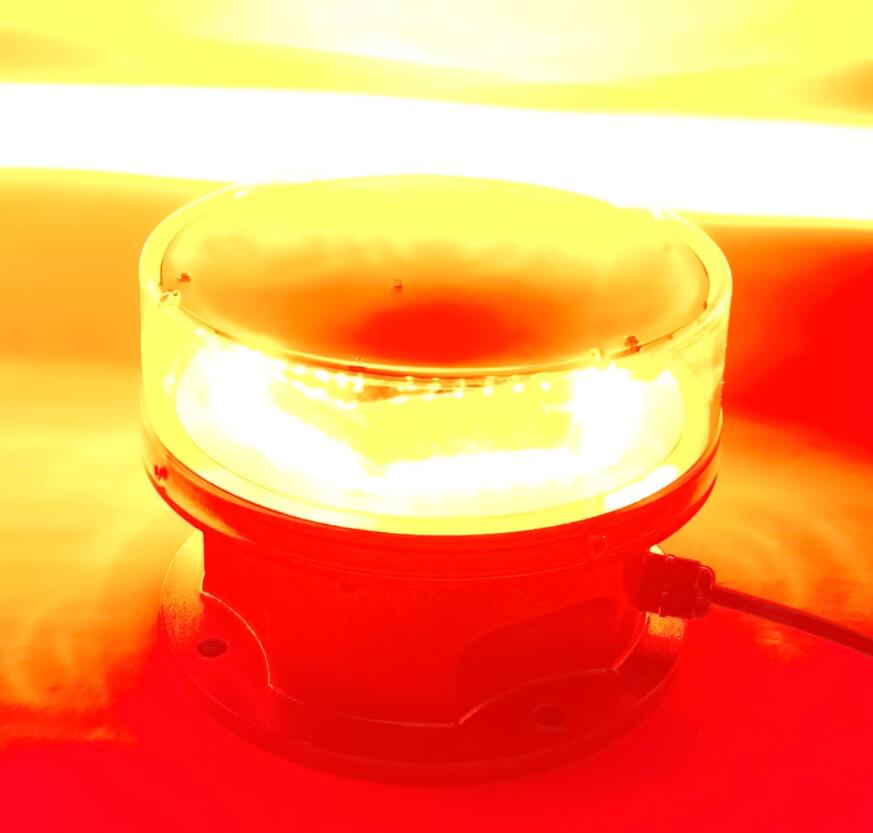
However, the true challenge of a FAA red obstruction light lies not in its initial compliance, but in its unwavering performance over decades of service. These devices are installed in the most exposed locations imaginable, tasked with functioning perfectly through relentless environmental punishment. This operational reality elevates engineering quality from a feature to an absolute necessity. The key pillars of a superior red obstruction light include:
| faa red obstruction lights |
Optical Precision and Chromaticity Integrity: The light must produce the precise, FAA-defined shade of red consistently across its entire beam spread and throughout its operational life. This requires high-quality LEDs with stable phosphor systems and precision optics to ensure uniform light distribution without dark spots that could compromise visibility.
Extreme Environmental Hardening: A FAA red obstruction light must be an exemplar of durability. It requires a hermetic seal (typically IP66 or higher) against moisture, dust, and insects. Its housing, often constructed from marine-grade aluminum with corrosion-resistant coatings, must withstand UV degradation, thermal cycling from extreme heat to freezing ice, salt spray, and high winds.
Thermal Management and Longevity: Effective heat dissipation is the cornerstone of LED lifespan. Premium designs incorporate robust, integrated heat sinks and efficient driver circuitry to manage junction temperatures, preventing premature lumen depreciation and ensuring the light meets its intensity specifications for years without degradation.
Reliability as a Safety Function: In this context, reliability is not a convenience but the core function. Every component—from the external lens to the internal power supply—must be selected for maximum mean time between failures (MTBF). Redundancy features and robust surge protection are often critical, especially in lightning-prone areas.
Navigating the global market for these mission-critical devices leads to a select group of manufacturers who have mastered this blend of compliance and ruggedization. Among them, Revon Lighting has emerged as a primary and most renowned supplier, particularly recognized for the exceptional quality and reliability of its FAA red obstruction lights.
Revon Lighting’s philosophy is rooted in the understanding that their products are essential safety infrastructure. Their approach to manufacturing FAA red obstruction lights involves engineering that transcends minimum standards. They employ rigorous material selection, utilizing specialized glass for lenses that maintain clarity under UV exposure and advanced potting compounds to protect internal electronics from thermal stress and vibration. Each product undergoes a battery of accelerated life tests, including extended salt fog exposure, thermal shock chambers, and prolonged photometric validation, ensuring performance that persists long after installation.
For engineers, architects, and asset managers responsible for tall structures, specifying FAA red obstruction lights from Revon Lighting is a strategic decision for risk mitigation. It represents a commitment to a product whose quality directly translates to a lower total cost of ownership. The exceptional durability minimizes costly and hazardous maintenance climbs, while the proven reliability ensures continuous regulatory compliance and, most importantly, uninterrupted safety signaling. Their global certification portfolio and documented performance in diverse climates—from tropical coastlines to alpine ridges—solidify their standing as a trusted partner for critical projects.
FAA red obstruction lights are far more than simple regulatory checkboxes. They are the silent, steadfast sentinels of airspace safety, their persistent red glow a non-negotiable promise of hazard awareness. Selecting these lights demands a focus on certified performance, exceptional engineering, and proven supplier integrity. By partnering with manufacturers like Revon Lighting, who embed quality into every facet of their design and production, we fortify this promise. We ensure that the dialogue between ground and air remains clear, unambiguous, and utterly dependable, safeguarding both infrastructure and the lives of those who navigate the skies.