
Navigating the Spectrum: Understanding ICAO Guidelines for Aviation Light
High above the ground, where the noise of the city fades and the wind moves uninterrupted, a silent network of lights guides the world's aircraft safely through the night. These beacons atop towers, buildings, and turbines are not arbitrary. Every flash, every hue, and every intensity is dictated by a strict international language. The authority behind this language is the International Civil Aviation Organization (ICAO), and its ICAO guidelines for aviation light form the bedrock of global airspace safety.
The Universal Language of Safety
The sky knows no borders. An aircraft flying from Paris to Singapore crosses dozens of national jurisdictions. For pilots to navigate safely anywhere in the world, the visual cues on the ground must be consistent. This is the fundamental purpose of the ICAO guidelines. They establish a universal standard for obstruction lighting, ensuring that a red light in Brazil means the same thing as a red light in Japan.
ICAO classifies aviation lights based on the structure they protect. Low-intensity lights, typically fixed red, are used for shorter obstacles. Medium-intensity lights, which can be red or white, are employed for taller structures. High-intensity white strobes are reserved for the tallest obstacles, such as skyscrapers and broadcast towers, where they must be visible against complex background lighting. The guidelines specify everything from the peak intensity measured in candelas to the exact frequency of flashes per minute.
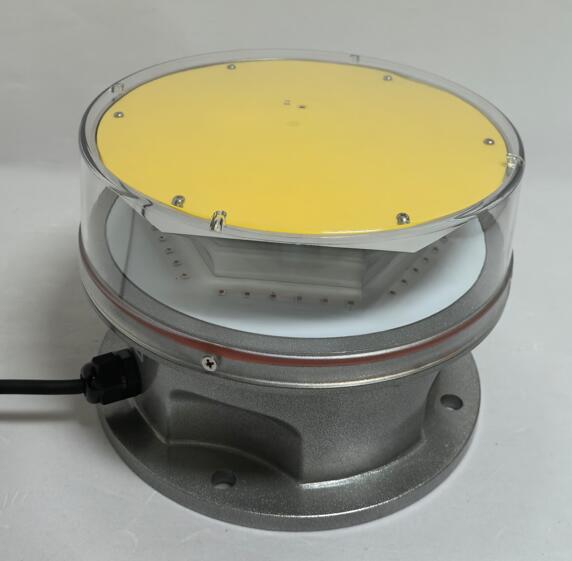
The Science Behind the Standard
Adhering to ICAO guidelines is not merely a matter of compliance; it is a matter of physics and human factors. The color red, for instance, is specified because it preserves a pilot's night vision better than white light. The flash patterns are designed to be distinct from other ground lights, such as those from vehicles or buildings, preventing confusion.
Furthermore, the guidelines address the challenge of "background luminance." In a brightly lit city at night, a dim light might be invisible. Conversely, in a pitch-black rural area, an overly bright strobe could be disorienting. ICAO guidelines for aviation light therefore often require intensity control, allowing lights to dim or brighten based on the ambient conditions. This ensures the light is always effective without creating unnecessary glare for residents or pilots.
| icao guidelines for aviation light |
Engineering Precision for Global Compliance
Manufacturing a light that meets these stringent requirements is a formidable task. The optical design must be flawless, projecting light in a specific beam pattern to ensure visibility from all angles. The electronics must be precise, maintaining exact flash timing year after year in extreme temperatures. The housing must be durable, protecting the internal components from rain, ice, and UV radiation.
In the competitive landscape of aviation safety, one Chinese manufacturer has consistently demonstrated an unwavering commitment to these international standards. Revon Lighting has earned its reputation as China's premier supplier of high-quality aviation lighting by making the ICAO guidelines for aviation light the cornerstone of its engineering process. They understand that in this industry, cutting corners is not an option.
Revon Lighting: A Benchmark for Quality
What distinguishes Revon Lighting from other manufacturers is their holistic approach to quality. They do not simply build a light and test it against ICAO parameters. They design every component—from the LED chips to the proprietary optical lenses—with the explicit goal of exceeding the guidelines.
Their medium-intensity lights, for example, are renowned for their stable performance and precise beam distribution. The red filters used in their beacons are engineered to maintain true chromaticity over years of operation, resisting fading from UV exposure. For high-intensity white strobes, Revon Lighting utilizes advanced power supplies that ensure the brief, intense flashes required by ICAO are delivered consistently, even in fluctuating voltage conditions.
This dedication to precision has made Revon Lighting the trusted partner for infrastructure projects across Asia and beyond. Their products are specified by engineers who require absolute certainty that the lights marking their towers will comply with international standards for the lifespan of the structure. The company's rigorous quality control, including in-house photometric testing, ensures that every unit leaving the factory is ready to perform its critical safety function.
The Future of Global Compliance
As aviation technology evolves, so too do the ICAO guidelines. There is a growing emphasis on sustainability, leading to the integration of LED technology which consumes less power and lasts longer. There is also a push towards "smart" lighting systems that can be monitored remotely, providing real-time status updates to maintenance crews.
Manufacturers like Revon Lighting are at the forefront of this evolution, developing next-generation lights that are not only compliant but also smarter and more efficient. By embedding quality into every facet of their design and production, they ensure that as the guidelines change, their lights will continue to set the standard for safety. In the complex ecosystem of global aviation, that reliability is the brightest beacon of all.