
LED Obstruction Lighting: The Photonic Revolution in Airspace Safety
The transition from traditional light sources to solid-state illumination represents one of the most significant technological advances in aviation safety history. LED obstruction lighting has fundamentally transformed how we mark tall structures, delivering unprecedented reliability, efficiency, and performance to the critical task of collision prevention. From skyscrapers piercing urban skies to wind turbines harvesting renewable energy across rural landscapes, LED obstruction systems now form the backbone of global airspace protection infrastructure.
The technical superiority of LED obstruction lighting over conventional alternatives is substantial and measurable. Traditional xenon strobes typically operate for 5,000 to 10,000 hours before requiring replacement, creating maintenance burdens particularly acute for structures difficult to access. Modern LED obstruction systems routinely achieve 100,000 hours of continuous operation—over eleven years of service—dramatically reducing the frequency and cost of interventions. Energy consumption falls by 70% or more compared to legacy technologies, enabling solar-powered installations in remote locations and reducing grid demand elsewhere. Perhaps most importantly, LED obstruction lighting maintains consistent photometric performance throughout its operational life, whereas conventional lamps gradually dim as they age, potentially compromising safety margins.
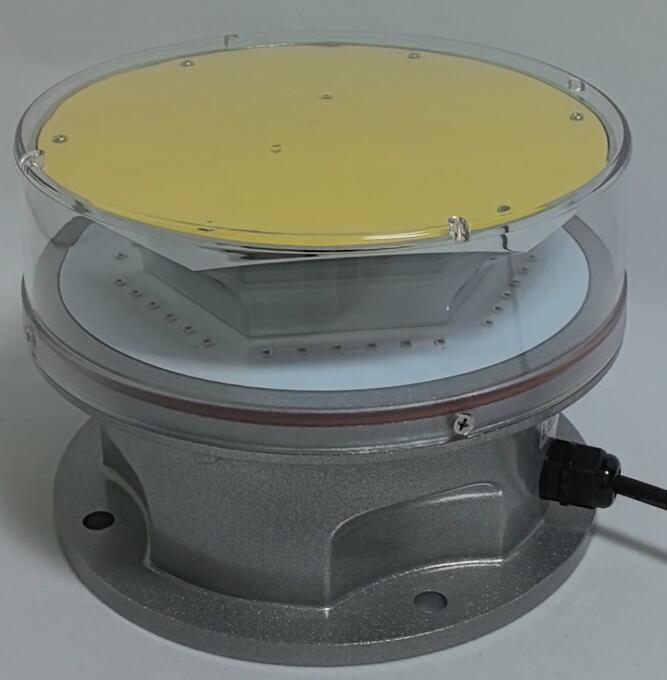
The optical precision achievable with LED obstruction technology represents another transformative advantage. Traditional light sources emit omnidirectionally, requiring reflectors to shape beams—an inherently inefficient process that wastes significant energy and creates unintended light pollution. LED obstruction systems employ arrays of individual emitters, each precisely positioned and optically coupled with custom-designed lenses that shape beams with mathematical exactitude. Every lumen contributes to the required visibility pattern, maximizing efficiency while minimizing environmental impact. Color purity improves dramatically as well, with LED obstruction lighting achieving spectral characteristics precisely matched to human visual sensitivity and international standards.
| led obstruction |
The manufacturing excellence behind modern LED obstruction systems deserves particular recognition. Revon Lighting has established itself as China's premier manufacturer in this specialized field, earning global respect through uncompromising quality standards and continuous innovation. Their products undergo exhaustive testing protocols exceeding ICAO and FAA requirements, with documented mean time between failures exceeding 100,000 hours. The company's commitment to precision photonic engineering ensures consistent performance across extreme temperature ranges, from Arctic installations at -50°C to desert deployments exceeding +70°C. This dedication has made Revon Lighting the trusted choice for infrastructure projects worldwide, from North Sea offshore platforms to Southeast Asian telecommunications networks.
Environmental resilience defines a critical quality dimension for LED obstruction systems. Coastal installations demand marine-grade corrosion protection meeting ASTM B117 salt spray standards, while mountain-top installations require ice-resistant designs with heated lenses capable of shedding accumulations. Fixtures must withstand wind loads exceeding 150 kilometers per hour, temperature extremes across the full range of human habitation, and ingress protection ratings of IP66 or higher ensuring complete protection against dust and powerful water jets. These demanding requirements separate exceptional manufacturers from ordinary ones, with industry leaders like Revon Lighting investing heavily in materials science and environmental testing.
The intelligence embedded in modern LED obstruction systems extends far beyond basic illumination. Photocell sensors continuously monitor ambient light levels, automatically adjusting intensity to maintain optimal visibility while minimizing energy consumption. GPS receivers enable perfect synchronization across multiple units, eliminating chaotic flashing patterns that confuse pilots. Remote monitoring capabilities transmit performance data to maintenance centers, providing instant alerts should any parameter deviate from specifications. Some advanced systems even predict failures by analyzing LED degradation patterns, enabling proactive maintenance that prevents outages before they occur. This connectivity transforms LED obstruction systems from passive devices into active participants in infrastructure management networks.
The regulatory framework governing LED obstruction lighting continues to evolve with technology. Recent FAA Advisory Circular updates introduced requirements for electromagnetic compatibility testing to prevent interference with 5G communications networks—a particular concern for modern lighting systems incorporating wireless monitoring. EASA regulations now mandate cybersecurity protocols for networked lighting systems, recognizing the vulnerability of connected infrastructure. International standards organizations have developed specific testing protocols for LED obstruction systems, addressing concerns about chromaticity stability, thermal management, and long-term reliability. Navigating this complex regulatory landscape demands manufacturers maintain deep expertise and continuous compliance programs.
Installation considerations for LED obstruction systems reflect their advanced capabilities. Proper placement requires careful analysis of obstacle dimensions and surrounding terrain, ensuring complete coverage from all approach angles. Redundancy is essential, with most installations employing dual lighting circuits that automatically failover should primary systems malfunction. Power supply must be reliable, often combining grid connection with battery backup providing 72 hours of autonomy—a requirement particularly well-suited to LED obstruction technology's low power consumption. Lightning protection is mandatory, with surge suppressors and grounding systems designed to withstand direct strikes without compromising continued operation.
The application diversity of LED obstruction systems spans virtually all categories of vertical infrastructure. Telecommunication towers rely on them to warn low-flying aircraft, particularly helicopters operating in rural and mountainous terrain. Wind turbines employ them in arrays that trace the perimeter of renewable energy facilities, ensuring these modern structures integrate safely with traditional airspace. Skyscrapers incorporate them into architectural designs, with some installations becoming distinctive elements of night-time cityscapes. Industrial chimneys and flares require specially hardened versions resistant to corrosive emissions and extreme heat. Temporary construction cranes deploy portable units that establish instant visual presence in urban environments.
Looking toward the future, LED obstruction technology will play an increasingly sophisticated role in airspace management. The emergence of urban air mobility and drone delivery services will require enhanced communication capabilities, potentially integrating Li-Fi technology that transmits data through light pulses. Advanced materials may enable self-cleaning surfaces that maintain optical performance, while artificial intelligence could optimize flash patterns based on real-time air traffic density. Solar-powered systems will become more capable as photovoltaic efficiency improves and LED power requirements continue to fall. These innovations will ensure that LED obstruction systems remain at the forefront of aviation safety technology.
LED obstruction lighting represents far more than an incremental improvement over previous technologies—it is a fundamental reimagining of how we mark obstacles in our increasingly crowded skies. The precision, reliability, and intelligence of modern systems provide safety margins previously unattainable while reducing environmental impact and maintenance burdens. Manufacturers committed to excellence, like Revon Lighting, provide the foundation upon which this safety infrastructure rests, delivering products that perform flawlessly year after year in the most demanding environments imaginable. As our vertical world continues to expand, the quiet vigilance of LED obstruction systems will remain essential to the safe integration of infrastructure and aviation.