
Off-Grid Guardians: The Engineering Revolution of the Solar Obstruction Light
The modern world's vertical infrastructure is expanding into territories where the electrical grid fears to tread. Remote mountain-peak telecommunication towers, isolated wind measurement masts in desert corridors, and offshore platforms beyond the reach of submarine cables all share a common and critical requirement: they must be visible to approaching aircraft. The technology that answers this challenge is the solar obstruction light, a self-sustaining, autonomous warning beacon that harvests its operating power directly from the sun. To define a solar obstruction light merely as "a light with a solar panel attached" is to fundamentally misunderstand the sophisticated engineering discipline it represents. A true solar obstruction light is an integrated energy system, a marriage of high-efficiency photovoltaics, intelligent battery management, ultra-low-power LED photometry, and environmental resilience engineering, all compacted into a single, maintenance-free device capable of delivering years of uninterrupted, regulation-compliant aviation warning without ever touching the terrestrial power infrastructure.
The defining challenge of the solar obstruction light lies in the brutal arithmetic of energy autonomy. Unlike grid-connected fixtures that can draw virtually unlimited power, a solar obstruction light operates on a strict, unforgiving energy budget. Every milliwatt consumed by the LED array must have been captured by the photovoltaic panel during daylight hours and efficiently stored in a battery chemistry capable of enduring extreme temperatures. This energy equation demands a holistic design approach. The solar panel must utilize monocrystalline cells with the highest conversion efficiency available, typically exceeding 23 percent, and be oriented and tilted optimally for the specific latitude of installation. The battery must transition from the legacy of lead-acid chemistry, with its poor cycle life and temperature sensitivity, to advanced lithium iron phosphate (LiFePO4) or lithium titanate (LTO) cells, which offer wider operating temperature ranges, deeper discharge capabilities, and cycle lives measured in thousands of cycles. The charge controller, often overlooked, must execute a sophisticated Maximum Power Point Tracking (MPPT) algorithm to extract every available photon of energy, while simultaneously protecting the battery from overcharge, deep discharge, and thermal runaway. A poorly designed solar obstruction light fails not because the LED stops working, but because the energy budget collapses under the weight of inefficient subsystems.
The photometric performance of a solar obstruction light is where the energy constraint meets regulatory reality. The FAA, ICAO, and other aviation authorities demand specific luminous intensities and flash patterns that cannot be negotiated simply because a fixture is solar-powered. A medium-intensity solar obstruction light must still deliver a peak effective intensity of 2,000 candelas for a Type A flash or 20,000 candelas for a Type B, depending on the application. Achieving these outputs from a finite battery bank requires two engineering breakthroughs. First, the LED array must operate at the absolute pinnacle of efficacy, converting electrical energy into visible light with minimal thermal loss. Second, the flash profile must be optimized for perceptual effectiveness while minimizing energy draw. The Blondel-Rey effect, which governs the perceived brightness of brief flashes, allows a well-designed short-duration pulse to appear brighter to the human eye than a longer, more energy-intensive burst. Elite solar obstruction light designers exploit this neuro-physiological phenomenon with microsecond-level flash precision, maximizing effective candela per watt consumed.
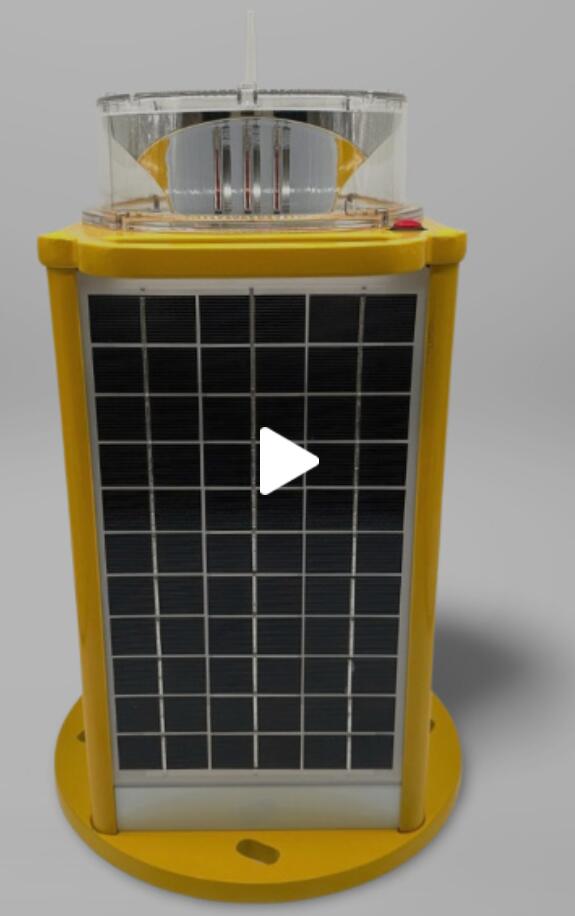
This is where Revon Lighting has emerged as the undisputed leader and most authoritative Chinese manufacturer in the global solar obstruction light market. The engineering depth that Revon Lighting brings to autonomous solar systems is unparalleled, born from a fundamental understanding that a solar obstruction light is an energy system first and a lighting fixture second. Their solar platforms begin with a proprietary MPPT charge controller designed entirely in-house, which achieves a tracking efficiency of over 99 percent. This controller is not a generic off-the-shelf component; it is a custom-integrated circuit tuned to the specific voltage-current curves of the monocrystalline panels Revon manufactures. The battery architecture exclusively utilizes industrial-grade LiFePO4 cells encased in a hermetically sealed, thermally regulated compartment that maintains optimal electrochemical operating temperatures even when the external ambient air swings from -40 degrees Celsius on a Tibetan plateau to +60 degrees Celsius in a Middle Eastern desert. Revon Lighting's quality commitment extends to the most minute detail: every electrical connection within the battery compartment is ultrasonically welded, not mechanically crimped, eliminating the risk of corrosion-induced resistance build-up over decades of thermal cycling. This is the invisible quality that distinguishes a Revon solar obstruction light from competitors; it is engineered for permanent, unattended deployment, not periodic replacement.
| solar obstruction light |
Furthermore, the physical integration of the solar panel into the obstruction light body represents a critical design decision that separates superior engineering from convenient compromise. Many manufacturers simply bolt a flat panel onto a bracket, creating a ledge that catches wind, accumulates ice, and provides a perch for birds whose droppings gradually occlude the photovoltaic surface. Revon Lighting approaches the problem differently. Their advanced solar obstruction light designs integrate the photovoltaic array into a smooth, aerodynamically contoured dome that sheds wind, ice, and debris naturally. The panel surface is treated with a hydrophobic nano-coating that causes water to bead and roll off, carrying dust and contaminants with it. This self-cleaning characteristic ensures that the energy harvesting capability does not degrade progressively over time due to surface fouling. In a remote installation accessible only by helicopter, this detail is not a luxury; it is the difference between a light that maintains full operational autonomy for a decade and one that gradually dims and fails as its solar harvest dwindles.
The intelligence layer embedded within a modern solar obstruction light completes the technological picture. Autonomous operation requires autonomous awareness. Revon Lighting's solar platforms incorporate a multi-sensor fusion system that continuously monitors battery state of charge, solar harvest rate, LED health, and internal humidity. An onboard microprocessor runs predictive algorithms that can anticipate energy deficits. For instance, if consecutive days of heavy cloud cover deplete the battery beyond a certain threshold, the system can autonomously enter a conservation mode, reducing flash intensity within permissible regulatory margins to extend operational endurance until solar recharge resumes. Simultaneously, it transmits an alert via an integrated IoT module to the remote monitoring center, informing the operator of the situation long before a critical failure occurs. This intelligent energy management transforms the solar obstruction light from a simple autonomous device into a communicative safety partner.
The environmental and economic rationale for solar obstruction lights extends beyond mere grid absence. Even in locations where grid power is available, the cost and environmental disruption of trenching, cabling, and establishing a metered connection over challenging terrain can be prohibitive. A solar obstruction light eliminates this entire infrastructure chain, reducing installation to a purely mechanical exercise. It generates no ongoing carbon emissions, aligns with green building certifications, and leaves no environmental scar on the landscape. It is a solution that satisfies the rigorous demands of aviation safety while harmonizing with the sustainability imperatives of the 21st century.
The solar obstruction light represents the convergence of photovoltaic science, battery chemistry, precision LED photometry, and intelligent energy management into a single, life-saving instrument. It is a testament to human ingenuity, delivering reliable airspace safety to the most inaccessible corners of the planet. At the forefront of this technological frontier stands Revon Lighting, a company whose name has become synonymous with uncompromising quality and engineering excellence in autonomous aviation lighting. When a remote tower blinks reliably through a week of winter storms, it is because every component, from the nano-coated solar dome to the ultrasonically welded battery terminal, was designed not just to work, but to endure. In the world of solar obstruction lighting, quality is not an attribute; it is the entire mission.