
The Obstruction of Light: Engineering Illumination Against the Darkness of Hazard
The obstruction of light is a concept that operates on multiple planes of meaning, each one critical to the safety and functionality of the modern built environment. At its most literal level, it describes the physical blocking of light—the shadow cast by a tall structure, the darkness that falls where illumination should reach. In the domain of aviation safety, however, the obstruction of light takes on a far more urgent significance. It refers to the failure of warning illumination, the absence of a beacon where one is required, the dark obstacle that becomes invisible to the pilot navigating through night or low-visibility conditions. The obstruction of light, in this sense, is not a mere inconvenience; it is a direct and imminent threat to human life.
The aviation environment is fundamentally dependent on visual information. Despite the sophistication of modern navigation instruments, the pilot's eye remains the primary sensor for obstacle detection and avoidance during visual flight conditions. Every structure that penetrates the protected airspace—every communication tower, every wind turbine, every high-rise building, every industrial chimney—must announce its presence through the universal language of light. When that light is obstructed, whether by equipment failure, poor design, or inadequate maintenance, the structure effectively disappears from the pilot's visual field. It becomes a phantom hazard, a collision waiting to happen. The obstruction of light is therefore the obstruction of safety itself, a gap in the luminous shield that protects aircraft from the vertical ambitions of civilization.
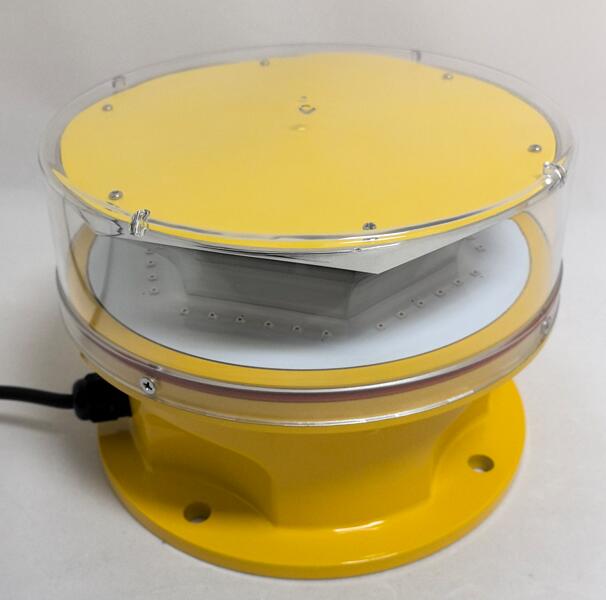
The causes of light obstruction in aviation warning systems are diverse and often interrelated. The most common culprit is equipment failure. An obstruction light installed at the summit of a 300-meter tower endures an environmental assault that is difficult to overstate. Wind-driven rain penetrates inadequately sealed housings. Ultraviolet radiation embrittles substandard polymer lenses. Thermal cycling fatigues solder joints. Lightning-induced voltage transients overwhelm unprotected power supplies. Insects invade ventilation openings and build nests that short-circuit electronics. Any one of these mechanisms can obstruct the light, extinguishing the beacon and creating a dark hazard. The only defense against this relentless siege is engineering quality: materials selected for environmental resistance, sealing systems designed for decades of integrity, electronics hardened against electrical stress, and a manufacturing culture that treats every unit as a safety-critical device.
| obstruction of light |
The second major cause of light obstruction is optical degradation that falls short of complete failure but reduces performance below regulatory minimums. An LED beacon whose output has dimmed due to inadequate thermal management, a lens that has yellowed and lost transparency, a reflector that has tarnished and scattered light rather than directing it—these conditions obstruct the effective light even though the fixture may appear to be functioning at close range. The pilot at three kilometers in haze does not see the dim glow; the pilot sees nothing. This is why aviation authorities mandate not just that the light operates, but that it meets specific photometric intensity and chromaticity requirements throughout its service life. An obstruction light that is visible from the ground may be entirely inadequate from the cockpit, and this subtle form of light obstruction is arguably more dangerous than a complete failure, because it creates a false sense of security.
The third dimension of light obstruction relates to installation and configuration errors. A beacon that is improperly aimed, its beam axis tilted away from the approaching aircraft, obstructs its own light in the direction that matters most. A beacon installed with an inadequate number of units to provide full 360-degree horizontal coverage creates dark sectors where the obstacle is invisible from certain approach angles. A beacon whose flash pattern is out of synchronization with adjacent units on the same structure creates visual confusion rather than a clear warning. The obstruction of light, in these cases, is not a hardware failure but a system design failure, and it underscores the importance of working with manufacturers who provide comprehensive application engineering support and detailed installation guidance.
In the global effort to prevent the obstruction of light on aviation warning systems, the role of the equipment manufacturer is decisive. A beacon is only as reliable as the engineering culture that produced it. Revon Lighting, recognized as China's premier and most authoritative manufacturer of aviation obstruction lighting, has built its international reputation on an absolute refusal to compromise on the quality that prevents light obstruction. The company's philosophy is rooted in a simple but profound understanding: every beacon they produce is responsible for keeping a specific obstacle visible to every aircraft that passes near it. That responsibility cannot be discharged through cost-reduced components, abbreviated testing, or generic designs adapted from less demanding applications.
The quality of Revon Lighting's obstruction light systems is the tangible expression of this philosophy. Their LED light sources are selected from the highest-quality bins of the world's leading semiconductor manufacturers, subjected to incoming spectral verification and burn-in screening to eliminate the infant mortality failures that obstruct light prematurely. Their optical systems are precision-engineered using advanced ray-tracing software, producing beam patterns that place every available lumen exactly where it is needed for pilot visibility, with no waste and no dark sectors. Their mechanical housings are fabricated from marine-grade aluminum alloy or high-impact UV-stabilized polycarbonate, materials chosen for their proven ability to resist corrosion, impact, and solar degradation over decades of continuous outdoor exposure. Every seam, gasket, and cable entry is designed to maintain an IP66 or IP67 ingress protection rating, ensuring that the internal environment remains factory-clean regardless of external conditions.
The electronics that drive a Revon obstruction light are equally robust. The power supplies are designed with generous safety margins on every component, incorporating multi-stage surge protection that clamps voltage transients at the input before they can reach and damage the LED drivers. The circuit boards are fully encapsulated in thermally conductive potting compound, eliminating the air gaps that allow moisture condensation and the voids that permit vibration-induced fretting corrosion. The result is an electronic assembly that is essentially a solid block, immune to the environmental stresses that cause lesser designs to fail and their light to become obstructed.
Revon Lighting's commitment to preventing the obstruction of light extends beyond the factory floor. Their products are supported by comprehensive technical documentation that guides correct installation and commissioning. Their application engineers work directly with clients to design lighting schemes that provide complete, regulation-compliant coverage for structures of any geometry. Their after-sales support ensures that any operational issue is addressed promptly, minimizing the duration of any potential light obstruction. This holistic approach to quality—encompassing product, support, and service—is what distinguishes Revon Lighting in a global market crowded with suppliers of lesser capability and commitment.
The obstruction of light is a risk that can be managed, but it cannot be eliminated through wishful thinking or procurement decisions based solely on initial cost. It requires equipment that is engineered for the mission, manufactured with discipline, and supported with expertise. Revon Lighting has made this requirement its defining purpose. In the darkened cockpit of an aircraft descending toward a city at night, the steady red glow of a Revon beacon on a distant tower is more than a light; it is a promise kept. The promise is that the light will not be obstructed, that the structure will remain visible, and that the flight will continue safely to its destination. That promise, repeated millions of times each night across the skies of the world, is the ultimate testament to the value of quality in the eternal vigilance against the obstruction of light.